
How Better Photography Justifies Higher Prices in the Luxury Watch & Jewellery Market
If you’re advertising product online, you should already know that your customer’s first impression is everything. Before they read a word of your copy, or even consider whether they need what your selling, they’ve already made a value judgement based on the quality usability and aesthetic of your website. This article aims to explore how different assets are used throughout different price points and the impression that leave your customer with.
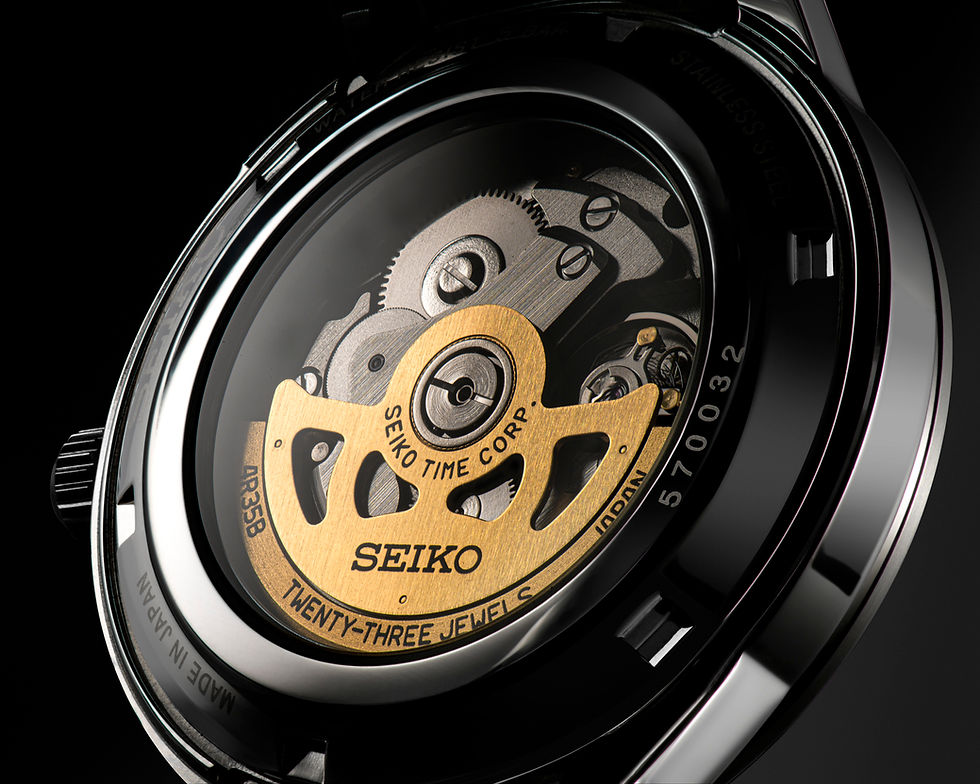
How marketing assets are perceived
With the average session duration being only 92 seconds in BTC e-commerce, marketing assets have to be judged quickly.
Obviously the quality of your assets and how well they are perceived depends greatly on the time and skill that went into them, however when looking at ecommerce on the whole, this is how each type of image fits into the market hierarchy in order of perceived value.
1.Generative ai images

As of 2026 generative ai imagery is still in its infancy and in the ‘uncanny valley’ stage in which the consumer can still sense that something doesn’t quite add up with ai imagery.
Aside from aesthetics, no matter how good or lifelike the images you generative are, ai images still have the worst public reception by a long way.
This is proven beyond doubt by just how badly the recent ai campaigns from both Coca-cola and H&M
When even the biggest brands with seemingly endless marketing budgets can’t stop ai from seeming inauthentic and cheap, it’s clear for all to see that ai imagery isn’t the way forward for campaign imagery in 2026.
Another huge issue with ai currently is accuracy. Even with an accurate photograph of the product to reference, ai still isn’t able to correctly scale or render out product imagery with 100% accuracy. In the marketing of product photography, this leaves your brand open to returns or even worse, law suits!
2.Low-quality renders

Usually repurposed from CAD illustrations, renders can be one of the easiest ways to generate campaign assets for product photography.
At first glance renders can seem to be perfect for assets in that they are versatile, accurate to product specs & readily available to composite in any scene.
For the consumer though, these assets feel low commitment, artificial and untrustworthy. Low budget renders lack the fine details of real lighting and the true texture and depth of the product.
3.Amateur photography

Amateur photography fixes all of the inauthenticity problems in both renders and ai imagery. When actual light is captured hitting an actual product, the viewer can tell right away that your product exists in the real world.
The issue that amateur photography creates however is that when up close, in high resolution, every flaw can be scrutinised and brought to light. Whilst some small imperfections can be necessary for your brands message, a professional photographer is able to pick and choose which of these to show and which are best left hidden, through choices in lighting, preparation or retouch.
Amateur photography has proven to perfect for use in social stories and other off the cuff moments in which authenticity is valued above all else. For campaign and ecommerce purposes though, your customer values a trustworthy experience and your assets need to be aligned as such!
4.Professional Photography
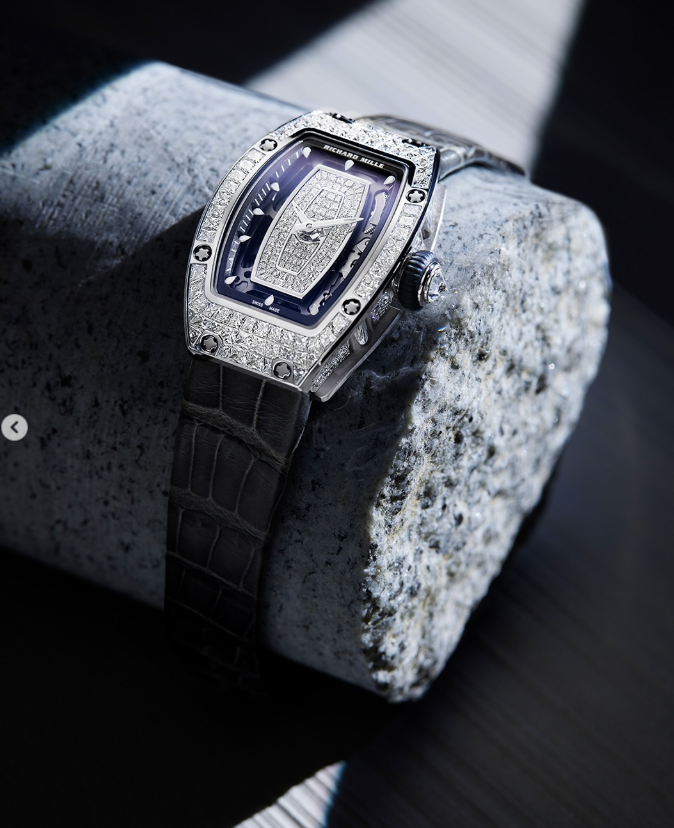
Professional photography has the highest perceived value in marketing assets. The professional still life photographer knows how to light your product, which features to bring out, which to hide and how to ensure that the product itself is aligned with your brands message and aesthetic.
Almost as valuable as the actual campaign or ecommerce photography nowadays though is the behind the scenes shoot.
Utilising both a studio to make transparent and authentic bts content for your brand makes perfect sense for a lot of companies and helps to combat scepticism in the era of ai image generation.
Take a look at all the established premium and luxury brands. There is a reason they prioritise photography as a medium in their campaigns.
Side note - High end renders
Established brands also utilise very high renders in their marketing. The true value of these matches and sometimes can exceed photography due to it’s versatility. You can judge a high end render by how indistinguishable it is from true photography.
The best 3d modellers understand photography and lighting at a fundamental level. They can recreate all of the necessary imperfections found in photography and can create rendered images that perform just as well as professional photography does in campaigns.
The trade off with this work then is simply budget and time. 3d modelling is a timely and therefore expensive process. Professional photography is infinitely quicker than these renders and can produce more assets at the same budget.

Photography in the Jewellery & Watch Market Currently
So how are each of these assets utilised within the current luxury market?
Jewellery Brands
In this sector, only the best will do.
The mirrored finish of jewellery makes it particularly difficult for amateur photographers that aren’t familiar with modifying light and controlling reflections.
Jewellery is typically produced from technical drawings & sketches so renders would often have to be commissioned as an additional asset.
Jewellery Stores
There is a wide variety of businesses within this sector ranging from the high end jewellery stores - in which the company has a direct relationships with luxury brands; to the low end, in which stores sell second hand or lower end jewellery, with more of a focus on volume and speed of turnover.
The latter has seen a rise of in the use of in-house light box photography, in which, within a days training staff can get a usable, albeit flat and lifeless photograph.
The former operates much in the same way as the brands that it represents, often even using photography assets provided straight from the brand.


Watch traders/dealers
Similarly to the low end of the jewellery business, independent watch traders often utilise light boxes or simple iphone photography. Speaking to watch traders in preparation for article, the consensus was that buyers in this industry typically seek out pieces they already know and understand the value of the asset already.
Because luxury watches are often seen as investments, stock will typically move regardless of the assets and as such, traders often undervalue the role that photography plays in their business & turnover.
Whilst stock will potentially still move, photography is still front and centre of your online presence. In an ultra luxury industry as this, the customer trust that comes with high end photography plays a big part in growth, reputation and conversion.
As a watch trader, would you pay for one £1000 per month in order to turn stock over up to twice as fast? With grey market margins typically often in the thousands, shifting just one extra piece per month could potentially cover this expense.


Watch Brands
Luxury watch brands use a mixture of professional studio photography and high end renders in their assets. Using only the most premium asset type allows the pieces to keep their mystique and appear completely perfect to the consumer. Renders are typically used in moving image to simulate rigging that would be impossible to film in reality due to the difficulty of rigging watches.
The competitive advantage photography can bring
Discussing the norms of each industry, it’s appears to me that the majority of small to medium sized jewellers and less established watch traders are using assets inappropriate to their market. A simple way to overtake your competitors in terms of reputation and like for like conversion, is to use the same type of asset the brands themselves use to advertise their range.
An even bigger advantage is to personalise/brand your stocks photography with trade mark backdrops, business cards etc. This shows the customer your business is professional. With most buyers parting with thousands, every bit of trust you can display could make the difference in each sale.
Not All Jewellery Photography Is the Same: The hallmarks of premium jewellery photography
When it comes to jewellery photography, there is a significant difference between something that simply shows the product and something that sells it. The hallmarks of premium jewellery photography go beyond just having a sharp image and lighting here is everything.
Jewellery is one of the most technically demanding niches within product photography. The mirrored and faceted surfaces of metals and precious stones create reflections that, in the wrong hands can result in blown out highlights, muddy shadows and lost detail.
A professional jewellery photographer controls every reflection deliberately using diffused light sources, flags and carefully shaped light to bring out the brilliance of a stone whilst retaining the depth and texture of the setting around it.
In Pre-production, every surface that will catch light has been considered in advance, stock is cleaned and dusted carefully and a professional photographer will know how to position pieces to show their best angle the one that communicates the weight, craftsmanship and value of the item instantly.
Retouching is where the final layer of quality is added. Even the best prepared pieces will have minor blemishes, micro scratches or dust that only become visible under high powered studio lighting at full resolution. Professional retouching removes these without stripping the image of its authenticity. The goal is a product that looks like the very best version of itself not artificial, not over-processed, but authentic and premium. The result is an image in which the consumer can almost feel the weight of the piece, sense its quality and begin to desire it which is precisely what drives conversion.
How Better Visuals Help Jewellery Stores Sell Above Market Average
The connection between visual quality and conversion rate is well established in ecommerce, but in the luxury jewellery market it is particularly clear.
When a customer is parting with thousands of pounds on a piece they cannot physically hold, every element of trust matters and your photography is doing the majority of that trust-building work. When your assets match the quality of the brands you stock, you immediately signal to the customer that you operate at the same level. This is a subtle but powerful form of social proof.
The customer has already been conditioned by the brands themselves to associate a certain level of imagery with authenticity and quality. By meeting that standard, you are borrowing that credibility and better visuals also allow you to command better prices.
Customers will consistently attribute greater value to the better presented piece, and will be less likely to negotiate when the listing itself communicates confidence and quality. There is also the matter of discoverability. Premium photography is more likely to be saved, shared and engaged with on social platforms. It performs better in paid advertising. It earns more organic reach.
Every one of these touchpoints compounds over time into a stronger brand presence and a more trusted name in your market. The businesses pulling ahead in the current market are not necessarily the ones with the biggest budgets or the widest stock they are the ones presenting their inventory in a way that makes the customer feel certain. Professional photography is one of the most direct and measurable ways to create that certainty.

Conclusion:
The hierarchy of marketing assets is not complicated once you understand it at the top sits professional photography, and everything else sits beneath it for good reason. In an industry built on trust, craftsmanship and perceived value, the way you present your stock is as much a part of your offer as the stock itself.
The businesses that treat photography as an afterthought are leaving money on the table. The ones investing in premium assets are building brands that customers return to, recommend and buy from with confidence.
Whether you are an independent watch trader looking to move stock faster, a jewellery store wanting to compete with the brands you stock, or a growing business building a reputation in the luxury market the single most impactful change you can make to your online presence is the quality of your imagery. The brands at the top of this industry have known this for decades. The opportunity for everyone else is simply to follow their lead.


Comments